Our first GEO readout was one chart per engine, pulled from generative engine optimization tools: a score and an arrow. Clients nodded and asked nothing. At the next budget review, two accounts cut the GEO line: the charts showed movement, never the answers. The share of B2B marketers expecting to increase digital marketing agency spend fell from 51% to 31% in a year.
For agency client services teams, the first pick is SE Visible by SE Ranking: in this AI visibility platform, every number in the readout opens into its stored answer and sources. There's no white-label option yet, so branded client views run through Looker Studio or exports. The tiers below follow where each platform's evidence lands.
This list is for account directors, client services leads, and heads of client success at agencies of 10 or more people selling GEO to mid-market and enterprise clients: 10-40 retained accounts, monthly readouts, quarterly business reviews, and some clients asking for their own logins. You don't run generative engine optimization tools day to day. You run the meeting where their numbers get explained.
What an account team needs from client reporting tools for GEO:
- Stored answers behind each number
- Sources and competitors clients recognize
- A view clients open between readouts
- Connectors into your client dashboard
- Movement explained from run to run
How I picked: In October 2026, I checked vendor public pages against these five needs. Six held up across three tiers. SEObot was added in November 2026 as a content execution companion.
How seven GEO platforms compare as feeds into client reporting tools
This table compares seven generative engine optimization tools on what reaches a client's AI visibility report: engines named, what the client can open, how data gets into the readout, and starting price, checked on vendor pages in October 2026, with SEObot added in November 2026. The tiers below explain each pick.
| # | Platform | Tier | Engines named | What the client can open | Into the readout | Starting price |
|---|---|---|---|---|---|---|
| 1 | SE Visible by SE Ranking | 1 | ChatGPT, Gemini, AI Mode, AI Overviews | Client access; no white label | CSV/XLSX, Looker Studio, API | Free trial available |
| 2 | Profound (agency) | 1 | ChatGPT, Perplexity, AI Overviews (Growth) | Public dashboard links | CSV/JSON; API on Enterprise | $399/mo workspaces plus base |
| 3 | SEObot | 3 | No dedicated AI-answer tracking | Published articles | REST API, webhooks, CMS integrations | $49/mo |
| 4 | Promptwatch | 2 | 11, incl. Claude, Grok | Branded read-only portal | API, MCP, Looker Studio | Agency tiers from $199/mo |
| 5 | AgencyAnalytics | 2 | 6, incl. Claude, Perplexity | White-labeled client portal | API, Google Sheets, MCP | $20/client/mo plus credits |
| 6 | Keyword.com | 2 | 5 chat apps, more via API | Read-only links; white label add-on | Looker Studio, API, MCP, PDF/CSV | From $7.83/mo, billed annually |
| 7 | Goodie (agency) | 3 | ChatGPT, Perplexity, AI Overview (Growth) | White-label client reports | MCP; API on Enterprise | $275/mo plus client workspaces |
Prices as published in October 2026 (November 2026 for SEObot); billing basis varies.
sbb-itb-b8bc310
Tier 1: what the account team reads before the readout
What the client asked: "Why does my ChatGPT say something else?" Usually, the wording changed. In a University of Maryland test of 13 models, rephrasing flipped many answers between correct and incorrect, with mismatch rates reaching above 23%. Tier 1 platforms give the account lead the stored answer to each agreed prompt, plus its sources, before the readout.
1. SE Visible
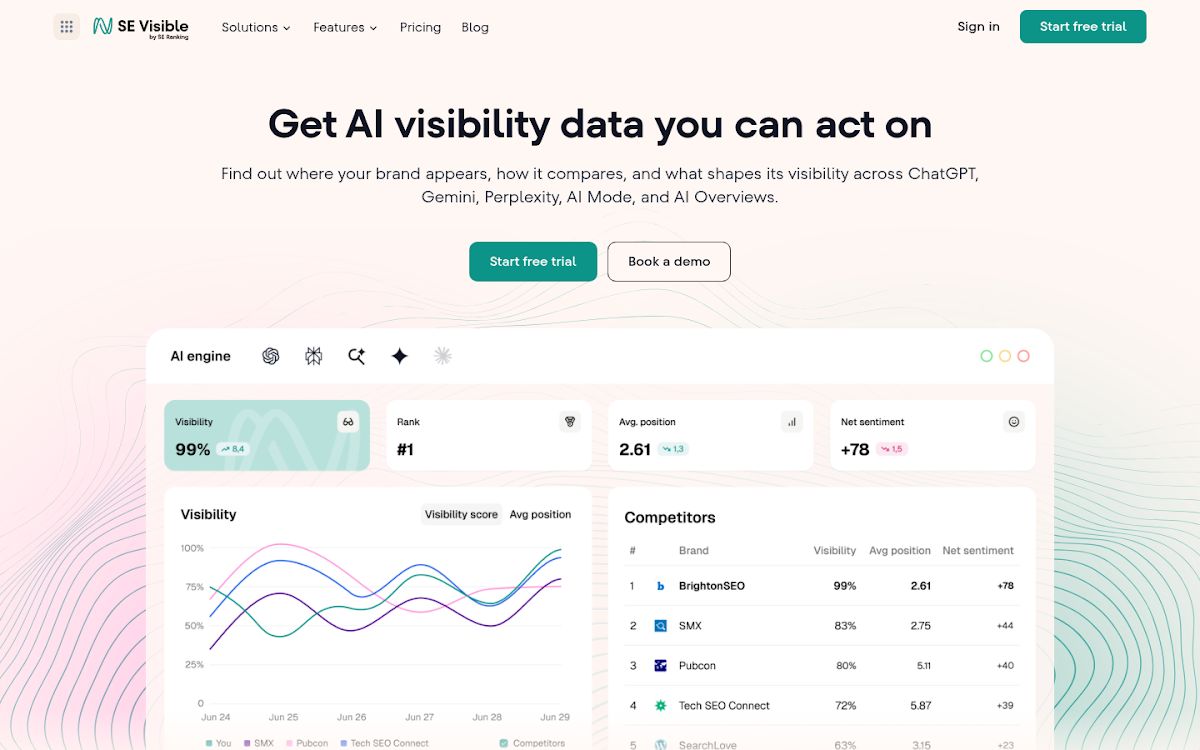
When a client's number drops between readouts, the account lead needs the reason before the client asks. SE Visible by SE Ranking is an AI visibility platform that tracks each client brand across ChatGPT, Gemini, Google AI Mode, and Google AI Overviews, daily by default.
Why it works for account directors: When a number moves, the account lead opens the stored response behind it, tagged by engine, market, and date, and the sources it cited. That happens in the meeting. Client access lets the client's team open the same evidence themselves.
Standout feature: Period comparison: net sentiment, share of voice, average position, and visibility score each show absolute and percentage change against the last period. Each metric opens into the response behind it. Among generative engine optimization tools and llm seo tools, that's the real check: can the number explain itself?
Pros:
- Covers its full engine list on all plans, without engine add-ons
- Holds several client brands under one account; users are unlimited
- Benchmarks competitors by topic, with change shown per column
- Feeds the readout through Looker Studio, CSV and XLSX exports, and API on all plans
Cons:
- White label isn't available yet; branded client views go through Looker Studio or exports
- Measures AI answers only; SE Ranking handles rank tracking and site audits
- Claude tracking and custom access control are still planned
- Native report building is still maturing
Pricing: Prices aren't quoted in this review; all plans include the tracked engines plus API access, and you can start on a free trial.
The second-question test: If your readouts stall on "show me the answer," SE Visible puts that answer in the account lead's hands first. See how SE Visible's brand visibility dashboard fits your readout prep. SE Ranking handles Google and traditional search, so pairing the two brings AI answers and classic rankings into one readout.
2. Profound
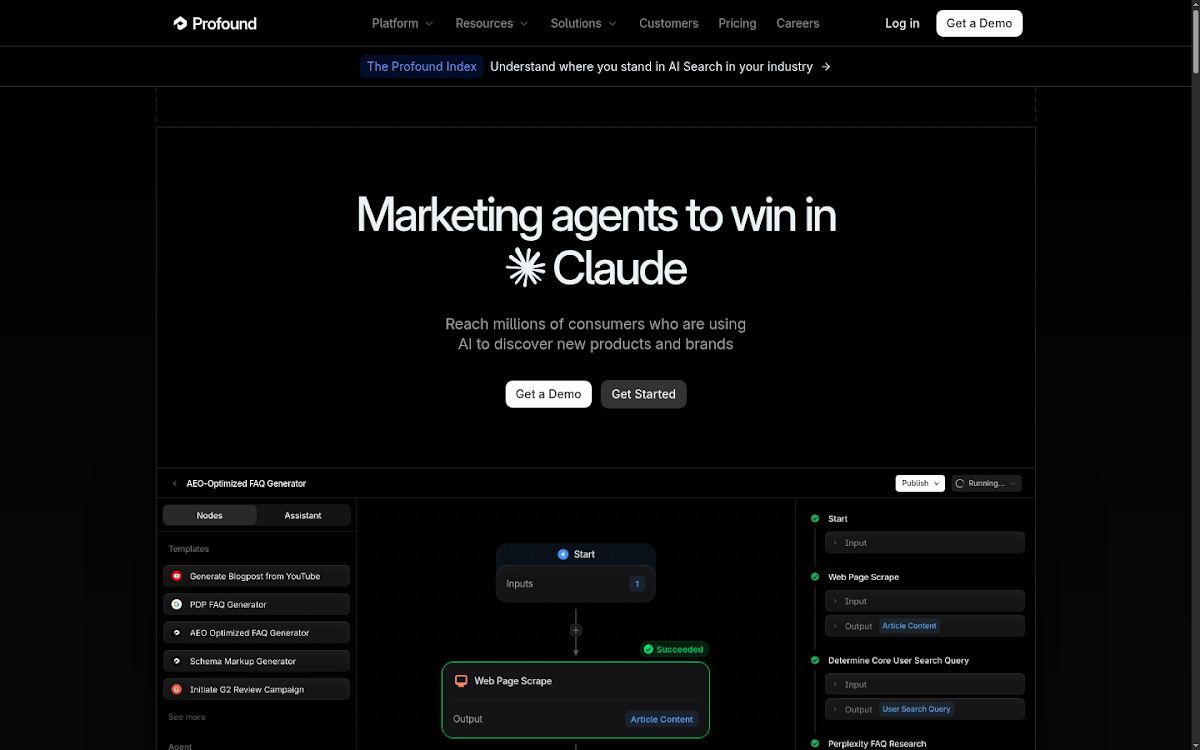
Profound, a GEO platform, builds its agency plan around client workspaces, one per brand, on a consolidated bill.
Why it works for account directors: Prep happens inside a single client's workspace, and Growth workspaces export CSV and JSON for the deck.
Standout feature: Custom dashboards go out as public links that open without a Profound login and refresh on every load. Build once; the client checks it between meetings.
Pros:
- Holds 100 prompts per client workspace
- Shares live dashboards outside your account
- Converts won pitches into client workspaces
Cons:
- API arrives only with Enterprise
- Agency Growth base fee isn't stated on its pricing page; white label isn't published
Pricing: Each client workspace adds $399 a month to the Agency Growth base; Enterprise is custom.
The second-question test: Among generative engine optimization tools, the public link answers "show me" cleanly. "Why did this move?" is harder: Growth limits AI citation tracking to ChatGPT, Perplexity, and Google AI Overviews.
3. SEObot (Tier 3: content execution companion)
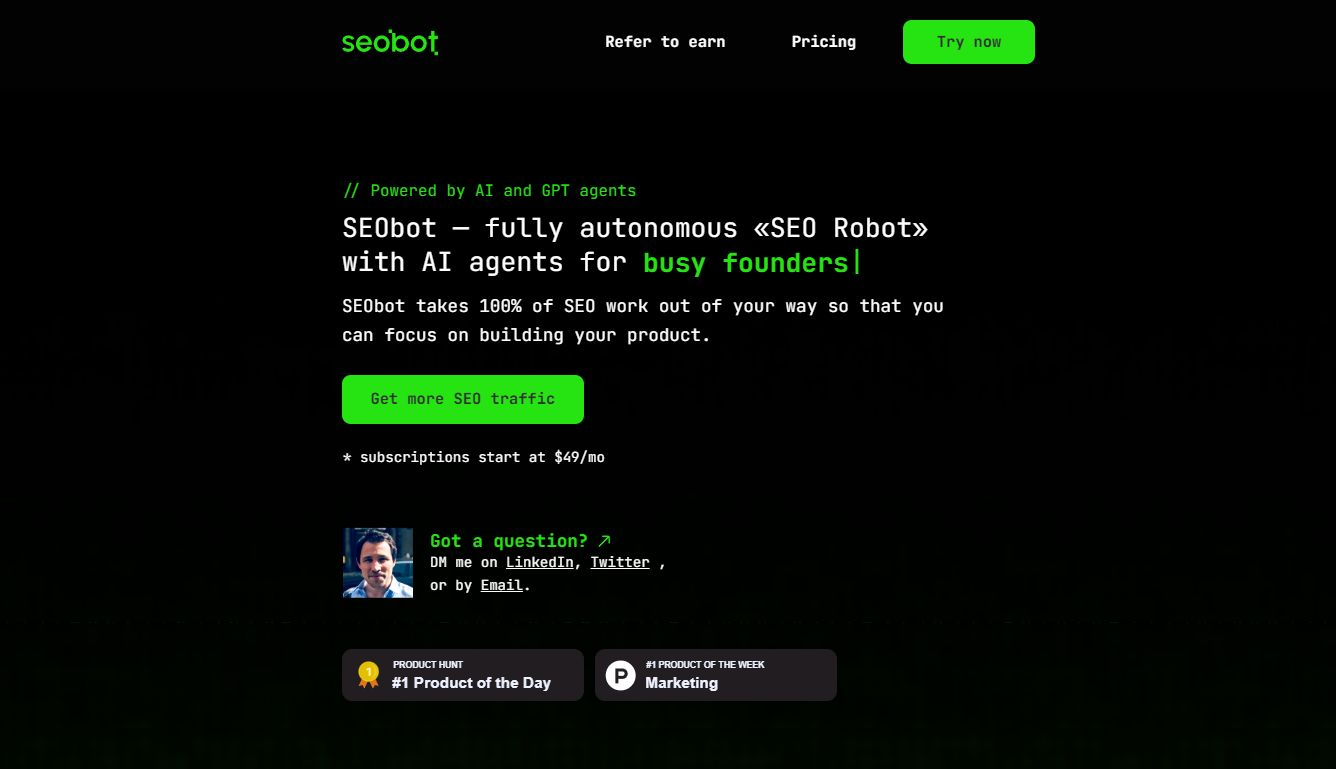
SEObot is an AI-powered SEO platform that takes on the content work behind a GEO retainer, from keyword research and article creation to internal linking and publishing.
Why it works for account directors: When the AI visibility report reveals a topic where the client is missing, the account lead needs more than another chart. SEObot helps turn that gap into a content plan and published articles, giving the account team work to point to at the next readout.
Standout feature: End-to-end content automation. SEObot researches topics, generates articles, adds internal and external links, and syncs content with the client's CMS. The account team can take the published URLs into the readout and compare them against visibility data from its GEO tracker.
Pros:
- Automates keyword research, content creation, internal linking, and publishing
- Supports over 50 languages for clients across multiple markets
- Connects to WordPress, Webflow, Shopify, Wix, and other CMS platforms
- Supports REST API and webhooks for custom content workflows
Cons:
- Doesn't replace dedicated AI-answer tracking or citation monitoring
- AI-generated articles need editorial review; human editing isn't included
Pricing: Subscriptions start at $49 a month for nine articles, with $99 for 20 and $199 for 50. Agency pricing starts at $3.50 per article for orders of 300 or more.
The second-question test: When the client asks "what are you doing about it?", the account lead can show the content published against the identified gaps. Pair SEObot with a Tier 1 platform to check whether that work translates into AI visibility.
Tier 2: what the client can open between readouts
Some clients stop waiting for the monthly readout. In a Digiday+ Research survey of 142 brand and agency professionals, 37% reported upper-funnel search traffic falling because of AI, and 21% lower-funnel. A client watching that line asks for a client dashboard of their own. Tier 2 generative engine optimization tools give clients that view between readouts.
4. Promptwatch
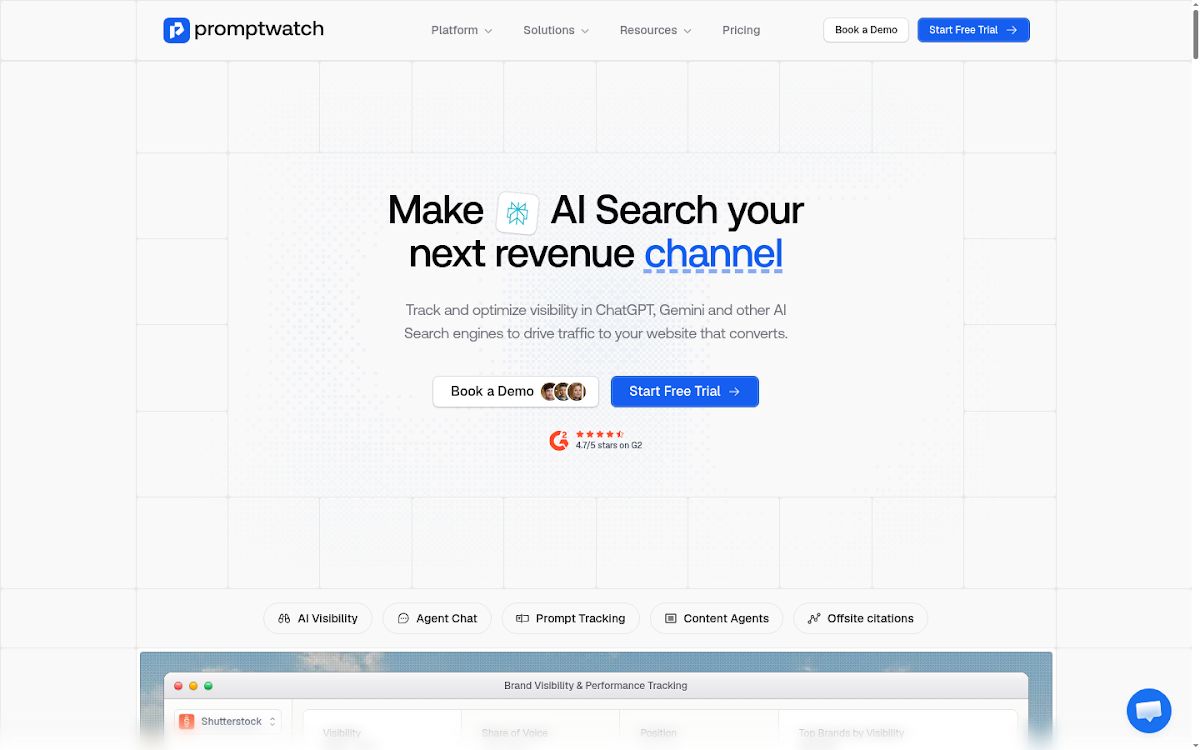
Promptwatch, a GEO tracker, runs each client as a project under one agency account and one invoice.
Why it works for account directors: Clients get branded, read-only access scoped to their own reporting. Seats can go to client contacts, limited to specific projects.
Standout feature: Every agency tier covers 11 engines, including ChatGPT, Perplexity, Claude, Gemini, and Grok, with no per-model add-on. The client's AI share of voice spans more than two or three engines.
Pros:
- Offers a white-label client portal
- Covers unlimited client and pitch projects
- Ships an API, MCP, and a Looker Studio connector
Cons:
- Monitoring pauses at 100% of the metered response quota
- Caps each tier at 10 seats, shared by staff and clients
Pricing: Agency tiers run $199, $399, or $799 a month, as Promptwatch publishes them; billing basis not stated.
The second-question test: When a client says "show me," they open the portal. Agree how quota pauses are handled, or the gap reaches their screen before your readout.
5. AgencyAnalytics
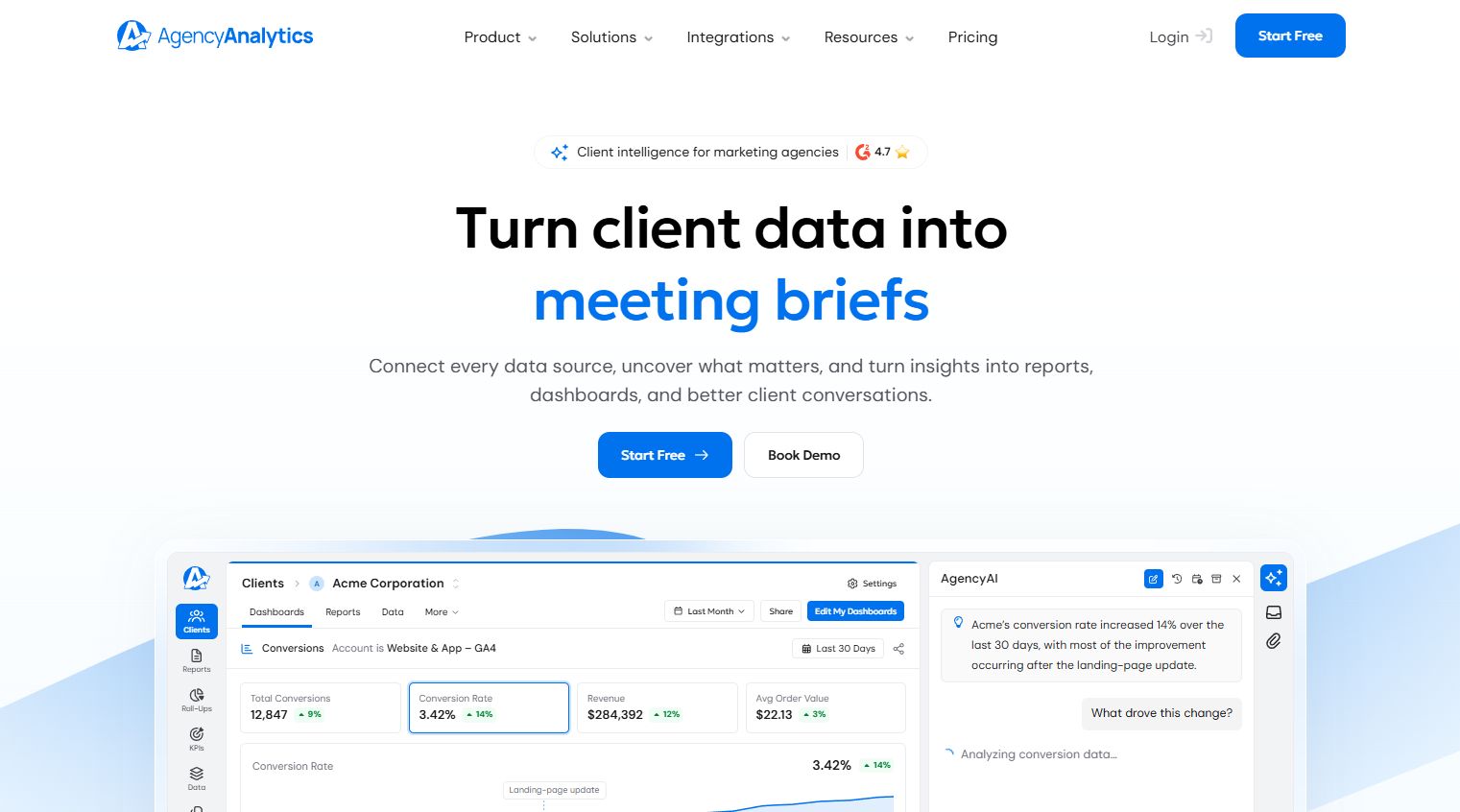
AgencyAnalytics adds generative engine optimization tools, as a Beta AI Tracker, to its agency client reporting platform.
Why it works for account directors: Clients already in its white-labeled portal see AI visibility next to their other channels, in the same automated reports.
Standout feature: One branded report covers ChatGPT, Google AI Overviews, Google AI Mode, Claude, Perplexity, and Gemini, with cited sources and competitors benchmarked per model.
Pros:
- Runs the portal on your own domain, with unlimited client users
- Keeps GEO inside agency reporting tools clients know
- Connects via API, Google Sheets, and MCP
Cons:
- AI Tracker is still labeled Beta
- Credits used per check aren't published
Pricing: $20 per client per month plus AI Tracker at $20.83/month per 250 credits, both billed annually.
The second-question test: Evidence arrives in a report the client already trusts. With AI Tracker still in Beta, pilot it on one account first.
6. Keyword.com
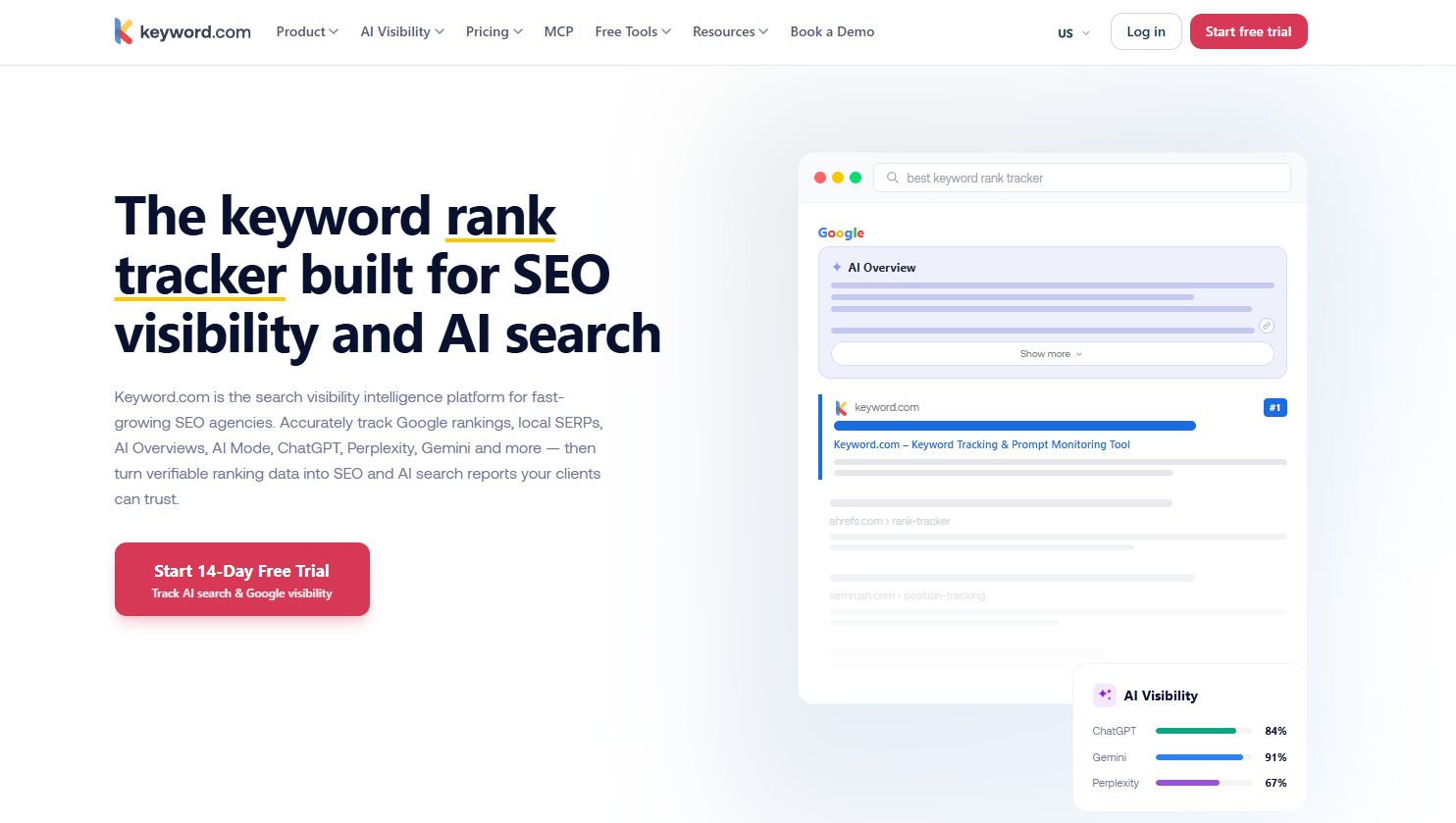
Keyword.com sells its generative engine optimization tools on credits, with live links clients open themselves.
Why it works for account directors: You share a live, read-only dashboard and schedule email reports, so competitors, citations, and sentiment reach the client between readouts.
Standout feature: The shared view refreshes behind a secure link, turning a monthly AI search analytics recap into a page the client checks mid-month.
Pros:
- Tracks ChatGPT, AI Mode, AI Overview, Gemini, and Copilot natively
- Feeds Looker Studio, API, MCP, and PDF/CSV exports
- Allows unlimited projects and users
Cons:
- Shared reports carry "Verified by Keyword.com" branding without the white-label add-on
- Claude and Perplexity run as API models at 1 credit per run (0.25 for chat apps)
Pricing: AI Visibility from $7.83/month billed annually ($9.80 monthly) for 20 credits; white label add-on $29/month or $278/year.
The second-question test: A live link shows the client the drop before you explain it, so brief the account lead first.
Tier 3: what feeds the work the retainer bills for
Every readout ends on "what are you doing about it?" Forrester's John Buten wrote: "The goal is no longer to replace lost traffic. The goal is to replace lost visibility." I read that as a readout rule: the last page is next month's plan. Two of these generative engine optimization tools also carry part of that plan.
7. Goodie
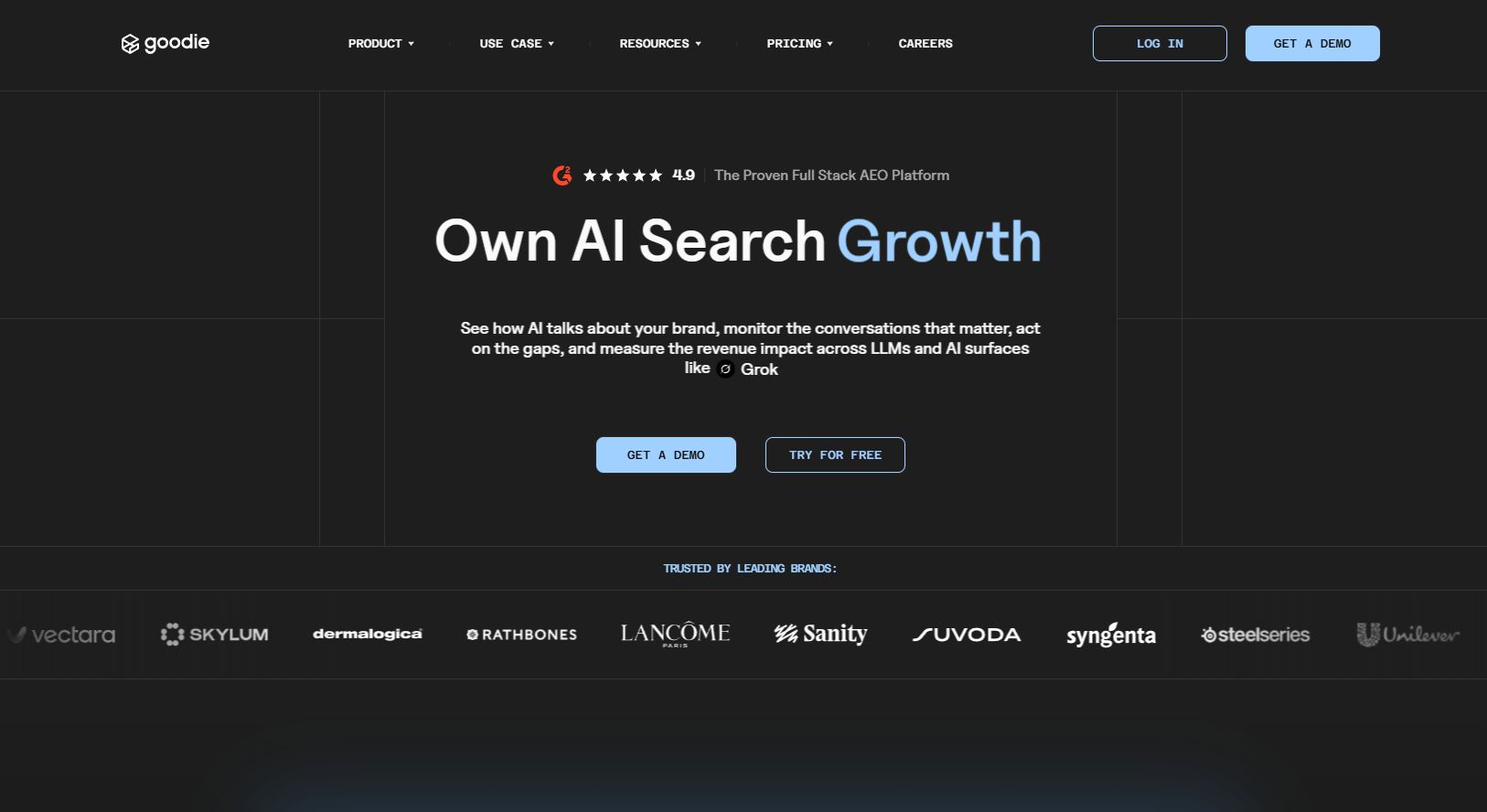
Goodie combines AI visibility tracking with agents that take on some of the client work.
Why it works for account directors: Each client gets isolated tracking and its own optimization workflow, so the plan slide shows work in motion.
Standout feature: Client reports and dashboards carry your agency's branding, and client workspaces include the full action layer: an AEO content writer, plus outreach and technical agents. A geo audit finding becomes a task there.
Pros:
- Includes unlimited seats and AEO strategist support
- Tracks inaccuracy rate and adverse citation share
- Opens MCP access on Agency Growth
Cons:
- No export or API on Agency Growth; both need Enterprise
- Growth workspaces track three engines: ChatGPT, AI Overview, Perplexity
Pricing: Agency Growth runs $275 a month (billed quarterly or annually), client workspaces from $399 a month, Enterprise custom.
The second-question test: Work underway answers "what are you doing about it?"; "show me the answer" is harder, since Agency Growth has no export.
Which tier should a client services team fund first?
Fund Tier 1 first. If the account team can't open the evidence behind the number, a client portal only shows the client that gap sooner. Add Tier 2 when clients ask for their own view, and Tier 3 when the retainer includes execution. Buy generative engine optimization tools in that order.
- If you need readout evidence across several client brands: SE Visible, with each number opening into its stored answer.
- If clients expect no-login dashboard links: Profound.
- If the retainer needs ongoing content production and publishing: SEObot.
- If clients want a branded portal: Promptwatch.
- If client reports already live in AgencyAnalytics: its AI Tracker.
- If the retainer bills for execution: Goodie.
Two of my accounts dropped their GEO line before we learned that order. Fund the evidence, then the view, then the work. To test the first tier, start with an SE Visible trial.
FAQ: GEO tools and client reporting
How do you measure GEO results for a client?
Track a fixed set of GEO KPIs per engine and market: visibility score, cited sources, net sentiment, and share of voice. A client's AI visibility report compares GEO metrics period over period and attaches the stored answer behind every move.
Should clients get their own login to a GEO platform, or only a report?
Give clients on larger retainers a login once your readout format is stable, because a login invites questions between readouts. Client reporting tools offer a white-label portal, a read-only shared link, or a connector feeding the client dashboard they already open every week.
Which generative engine optimization platform fits client reporting best?
The best fit is the one whose numbers open into the stored answer and its sources. Among generative engine optimization tools, our account teams start with the SE Visible platform, and build branded client views in Looker Studio, since white label isn't available yet.
