The pitch went out at 8:10 on a Wednesday: one question in the subject line, a chart under it. Not a high-volume keyword. Our tools rated it near-invisible, a few hundred searches a month. But it was what our client's buyers typed at 11pm, and by Friday two nationals and a trade title had run it. The ledger: 74 pitches, 9 replies, 6 placements, 41 hours. The month before, chasing the fat-head term returned nothing. That gap is why I stopped judging keyword research tools by search volume and started judging them by whether they hand you the question.
The short version: for content and digital PR teams, SE Ranking is the strongest single pick, because it tags search intent the moment a keyword lands and flags which terms trigger AI Overviews, so you separate a story-angle query from a transactional one before you brief a writer. One honest caveat: AnswerThePublic digs deeper into raw autocomplete phrasing.
What do content and PR teams need from a keyword research tool?
A keyword tool earns its place on a content or PR team when it does five things: surfaces the questions people phrase in full, classifies search intent, flags which terms trigger AI Overviews, exposes a competitor's angle or gap, and exports clean enough to drop into a brief.
Here is why that last criterion matters now. Pew Research found 88% of AI summaries cited three or more sources, and only 1% leaned on a single one, with a median length of 67 words. An answer engine builds its reply from a spread of pages, and it favors the ones that phrase a question the way a reader asked it.
So I stopped scoring tools on database size. My bar is operational: does it hand me the question a journalist would run, tag whether it wants a story or a checkout, and export the shortlist without re-keying. Fail two and it does not earn its hours.
sbb-itb-b8bc310
The 7 keyword research tools, ranked
Seven tools earn a place below, ranked by how they serve content and digital PR work: whether they surface the question, tag intent, and flag the terms AI answers pull from. Price appears as a fact, never as the reason to pick one.
1. SE Ranking
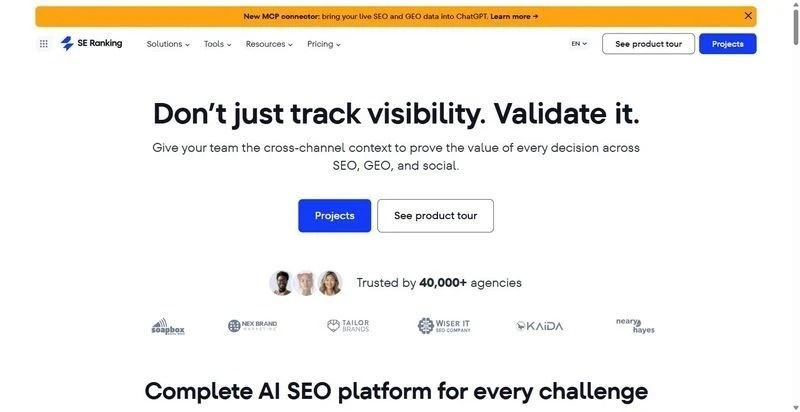
SE Ranking reads search intent before you brief a writer: it classifies every term at ingest and flags the ones that trigger AI Overviews, so a content brief starts from an angle instead of a volume number.
Best for: in-house content leads and digital PR managers commissioning data stories and building content hubs.
Standout feature: Its seo keyword research module works across a 5.5B keyword database and 188 country databases, tagging each term informational, commercial, transactional, navigational, or local. Question-based idea generation surfaces how people actually ask, 35+ SERP-feature filters flag AI Overviews per term, and selected terms hand off to Content Editor as a ready brief.
Pros:
- Reads intent and question ideas from one screen, so a brief opens on the right angle
- Flags which terms trigger AI Overviews before you commission the page
- Sends selected terms straight into Content Editor as a brief, no re-keying
Cons:
- Keyword data is Google-only, with no Bing, Amazon, or YouTube coverage
- Historical depth is plan-gated: the Core plan holds six months
- Bulk analysis is capped at 100 keywords per call
Pricing: Core $129/mo ($103.20/mo billed annually); Growth $279/mo.
Where it landed: On a data-story campaign the win is spotting the question a journalist wants answered before a word gets written. This is the one tool here that tags intent and AI Overview terms at ingest, so the brief chases an angle, not a search-volume number. On our last content hub, that early read saved us a full rewrite and a week of drift.
2. Ahrefs
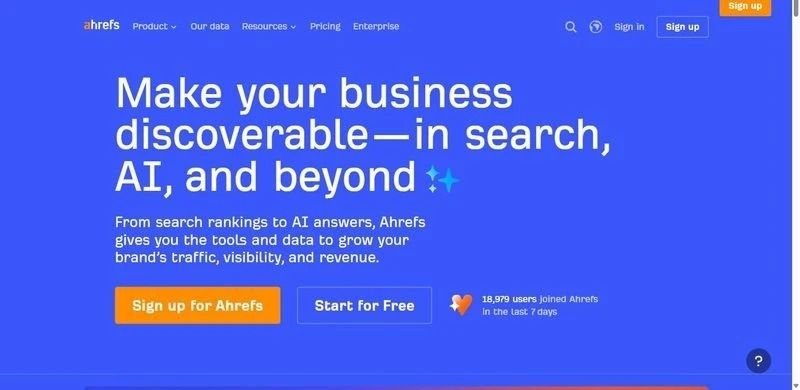
Best for: teams hunting underserved angles rivals have not covered.
Standout feature: Keywords Explorer weighs what a topic set already ranks for against what nobody has published. For a PR team chasing a data angle, that gap is where the story hides.
Pros:
- Surfaces net-new topics across a large index
- Maps parent topics so one asset covers a cluster
- Exports term lists for briefing at scale
Cons:
- Intent signals lighter than tools that tag automatically
- The Lite plan caps export volume
Pricing: Lite $129/mo.
Where it landed: We open this at ideation, when the only question is what nobody has written. It finds the gap fast, then the shortlist moves on for intent.
3. SeoBot
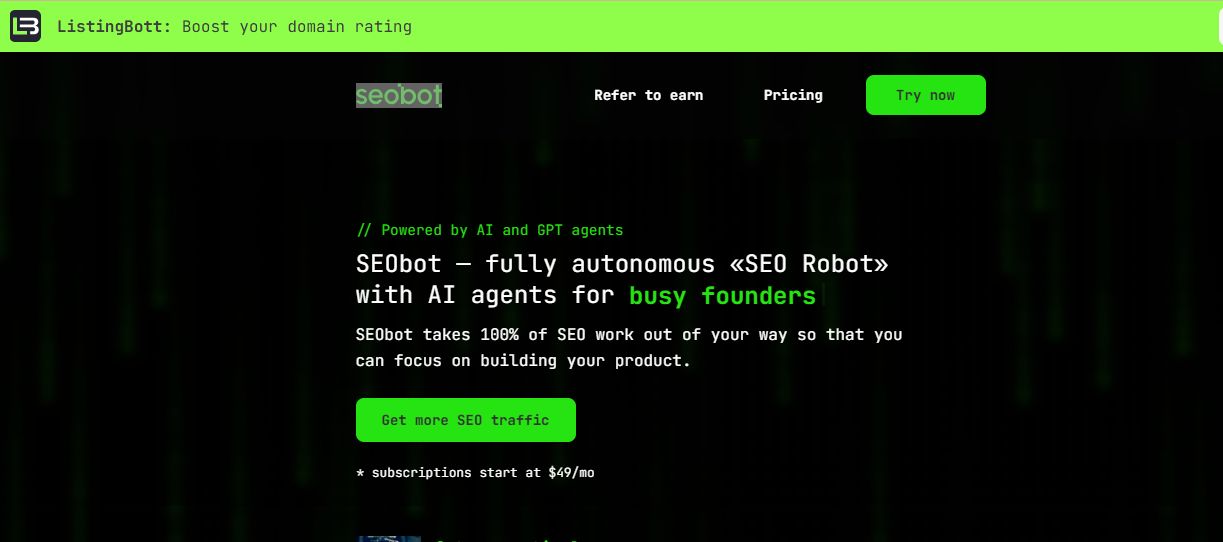
Best for: Content teams that need actionable SEO and keyword research data prior to developing or optimizing their content.
Standout feature: The SeoBot tool allows users to conduct keyword research and identify SEO opportunities, offering content teams the ability to go from a broad topic into an SEO-optimized list.
Pros:
- Helps find keyword ideas about a specific topic
- Aids in SEO analysis for content planning
- Can help arrange keyword research before content creation
Cons:
- The availability of information varies with the selected SeoBot options and package
- It is more appropriate for SEO-related studies than enterprise keyword databases
- Further tools will be needed for analyzing competition and search engine results pages
Pricing: Check the current SeoBot plans for live pricing.
Where it landed: SeoBot is useful in the research phase when the group has its subject and needs to transform that into keywords. It is applicable for narrowing down the research before writers get their brief, although other SEO software might be better suited for competitive/SERP research.
4. Semrush
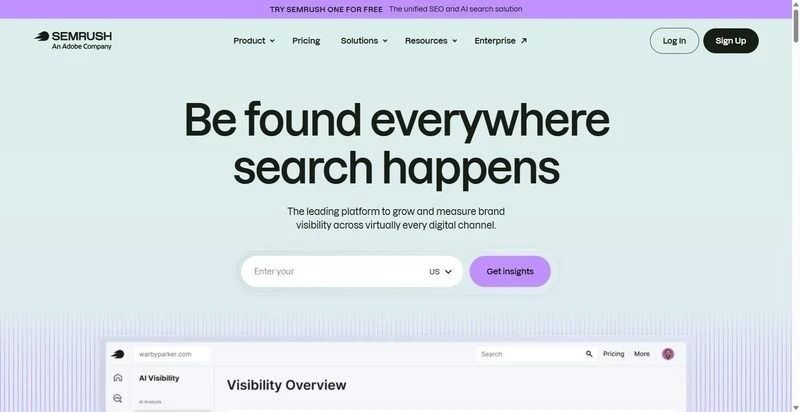
Best for: teams brainstorming article and campaign topics across broad markets.
Standout feature: Topic Research spins a seed into subtopics, headlines, and questions, while Keyword Magic works as a keyword generator, pulling variants from a very large database at speed.
Pros:
- Generates a wide topic and question set from one seed
- Draws term variants from a very large index
- Bundles ideation with wider marketing data in one login
Cons:
- Breadth comes ahead of the intent depth a brief needs
- Plan names changed in 2026, confirm current tiers first
Pricing: from $139/mo (2026 lineup).
Where it landed: Useful when the brief is a blank page and you need angles to sift. It is an idea firehose, but breadth is not knowing which question earns a placement.
5. Moz Pro
Best for: content teams shortlisting angle terms before briefing a writer.
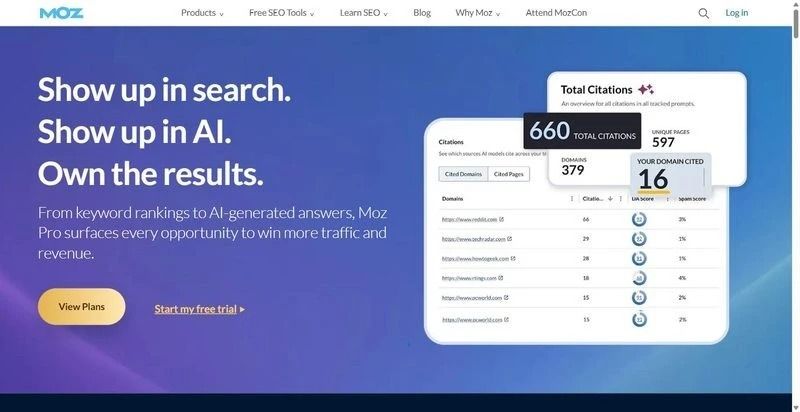
Standout feature: Keyword Explorer's Priority score blends volume, ranking difficulty, and organic CTR into one number, so a raw list of candidates sorts in seconds. The SERP view then shows which pages already own a question.
Pros:
- Rank a shortlist fast on a single Priority score
- Read SERP analysis to see who already ranks
- Group terms into content-hub clusters
Cons:
- Smaller keyword index than top-tier databases
- Lighter SERP-feature depth, thin AI Overview signals
Pricing: Standard $99/mo ($79/mo billed annually).
Where it landed: On a fintech hub last spring, Priority score cut a 400-term dump to 30 in an afternoon. The ledger: 40 pitches, six placements. The autopsy: fast to shortlist, but blind to which terms feed AI answers.
6. Google Search Console
Best for: seeding a content hub from demand you can already prove.
Standout feature: the Performance report lists every query your pages surface for, with impressions, clicks, and average position. That is the honest record of what your audience types, not a modeled guess.
Pros:
- Pull first-party queries no estimator can match
- Spot near-miss questions sitting on page two
- Export impression data to seed hub topics
Cons:
- Covers your own site only, no competitor discovery
- No search volume or difficulty figures
Pricing: free.
Where it landed: A B2B client's export handed us 11 questions they already ranked eight to fifteen for. We built assets around six. The ledger: nine pitches, three placements. No net-new angles, but it never lies about demand.
7. SpyFu
Best for: PR teams building a competitive angle against a named rival.
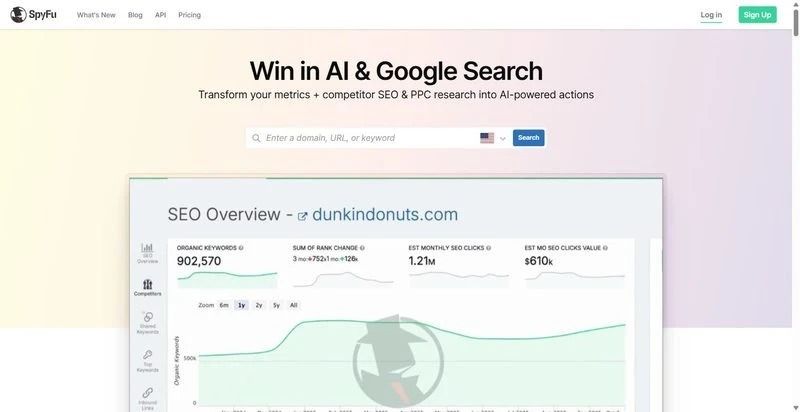
Standout feature: SpyFu keeps years of competitor keyword history across organic and PPC. The paid list is the tell: questions a rival pays to answer mark the gaps their content left open.
Pros:
- Trace a rival's organic keyword history over years
- Read PPC buys to spot content gaps
- Export competitor term lists for research
Cons:
- PPC-leaning, thinner on pure content intent
- Interface feels dated next to newer SpyFu alternatives
Pricing: Basic $39/mo ($33/mo billed annually).
Where it landed: SpyFu's paid-keyword list exposed three questions a rival was buying and answering badly. We answered one, pitched the data, and two trade titles ran it. Strong for reconnaissance, weak as a primary source.
How do you combine keyword research tools on a campaign?
The campaigns that landed never started with a volume column. They started with a question a journalist could write from. Sequence your keyword research tools this way: seed from GSC, the queries your hub earns impressions on, then widen with AnswerThePublic for the raw phrasing people type. Run that shortlist through SE Ranking to tag intent and flag AI Overview terms, so the brief points a writer at a story angle, not a transactional page.
That order roughly halved the pitches that died unread on our last data campaign. Skip it if you only need rank-tracker accuracy on a fixed term set. The open question I cannot close: how fast AI answer engines change which questions they surface, and whether last quarter's angle still earns a placement.
FAQ
How do you find question keywords for a content or PR campaign?
Start with Google Search Console: the questions your pages already earn impressions on are proven demand, not guesses. Widen with AnswerThePublic for raw autocomplete phrasing, then tag each term by search intent to separate a story-angle query from a transactional one before briefing.
Which keyword research tools show the phrasing people actually ask?
Autocomplete tools like AnswerThePublic map the exact question, preposition, and comparison phrasing searchers use. Pair them with first-party Google Search Console queries and a platform that classifies intent, such as SE Ranking, so the wording you chase is real and tied to demand.
Can keyword research tools find data-story angles for digital PR?
Yes. Intent tagging, question generation, and competitor gap views together surface the underserved angles a data story can hang on. The tool will not write the pitch, but it flags which questions carry demand and thin coverage. That gap is where a journalist finds something new.
