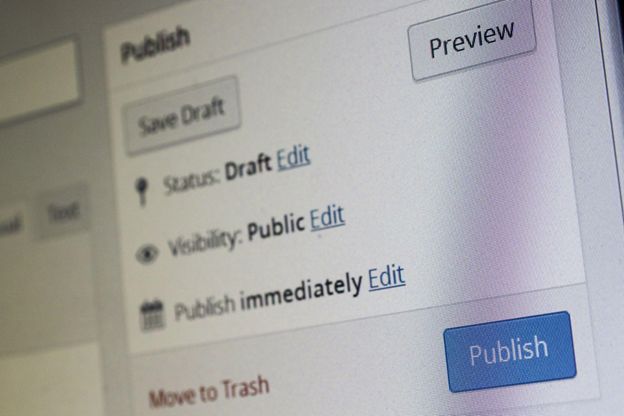
A CMS showing details about content status on a desktop. Source
Modern marketing teams juggle between content projects for multiple clients. This means more brand voices to follow and a complex content delivery process.
Although you may use AI to automate workflows, the core challenge remains the same: How to scale delivery while maintaining consistency across accounts?
The solution is building a structured content workflow that can speed up production.
We'll explore a powerful framework and tools that help you standardize content operations.
What Does Content Delivery Mean For a Diversified Client Base?
Content delivery is the process of preparing and finalizing content for distribution. It’s how you present and prepare to deliver content through different formats and channels that persuade your audience to take action. This step is also where you consolidate the final assets, send them for approvals, and prepare for publishing.
Let's say you have a blog post titled "Best cold email strategies for 2026." The real challenge is how to deliver this asset so people read it. It's the part where you decide: how the content is finalized, approved, formatted, and prepared for publishing.
Content Creation vs. Content Delivery vs. Content Distribution
The main differences are:
- Content creation: Making the content,
- Content distribution: Choosing which channels to present it in and what type of audience will receive it,
- Content delivery: It's the strategy behind how content reaches and displays to the audience. This includes the formats, delivery infrastructure, platforms, and timing.
Managing content distribution becomes a real problem as your clients' marketing needs increase.
You end up handling information on multiple channels that can get messy real quick.
This stage is where most delivery systems struggle.
sbb-itb-b8bc310
Where Does Content Delivery Fail?
Content delivery glitches are not always easy to identify. It breaks at specific points, such as targeting the wrong people or choosing the wrong delivery format.
Your delivery methodology might not work if there is:
- Inconsistent file format usage: Content existing in different formats, such as Word, PDFs, or Notion Pages, slows down publishing workflows.
- No clear ownership: No one takes responsibility for publishing content, distributing it, or maintaining deadlines.
- Fragmented communication: There is no unified communication channel, failing to bring clarity to different teams.
- Approval delays: Your stakeholders and internal team members prolong finalizing the content.
These issues only multiply as you add more clients to the roster. But systemizing content delivery reduces these risks, allowing you to effectively segment the audience and personalize content.
How a Structured Content Workflow Reduces Delivery Failure Risks
By structuring workflows, we mean:
- Assigning roles and responsibilities to every team member,
- Using standard file formats and templates with room for changes,
- Implementing stage-based content approvals,
- Using one platform to discuss content operations.
While maintaining structure, you also want the data distribution model to be flexible. This allows you to personalize brand interactions without losing nuance.
Audit Your Current Content Delivery Process
To standardize your workflows, it's important to understand your current processes and how they might contribute to the development. Without this information, you'll likely be stuck in a recurring pattern that does not work.
Audit your current content delivery operations to know:
- How the content moves from the creation stage to the delivery stage,
- Which points cause delays,
- How many revisions occur,
- At what point miscommunication happens.
The analysis will show you patterns that drain time and resources during delivery. This makes it easier to create a baseline for future deliveries. Ask yourself, "what does a successful content delivery look like?" Is it publishing content on time, helping it reach the correct target audience, or minimizing content approval delays?
The Difference Between Content Workflows, Editorial Workflows, and Content Operations
Here's how the three are similar but serve different purposes:
- Content operations: It refers to the strategic direction, including people, tools, and processes. It's the bigger picture that governs content in every department.
- Content workflows: It's the repeatable processes used to produce and publish content.
- Editorial workflows: It involves planning topics, content calendars, style guidelines, etc that control content quality and consistency.
These aspects rely on each other to get the content moving in the right direction. The editorial workflow guides content workflows with tone, voice, and messaging goals. The latter uses this information to create repeatable systems without losing quality. Content operations supports both with tools, ownership, and analytics.
However, letting them overlap can lead to delays, confusion, and inefficient processes. For instance, if an editor is asked to format the content on top of checking the tone and flow, you can expect content delays.
How to Design a Scalable Content Delivery Workflow?
Knowing when to use each process and how to tie them to your overall goal is the primary step to developing a content workflow system.
You can streamline content delivery by implementing:
- Task tracking: Monitoring content as it moves through the workflow provides a clearer image of who's responsible and when the work gets done.
- Version control: It lets you keep a tab on the edit history and updates to the content, so everyone aligns with the messaging.
- Approval checkpoints: Ensuring the content is approved internally before it goes out strengthens workflow clarity.
- Delivery triggers: Automating content distribution assures the content goes out at the right time.
A practical workflow should be simple, repeatable, and define how content moves through each stage.
For agencies, a content workflow would look like: draft → internal review → client approval → delivery formatting → distribution.
This workflow is made better when it can be used for different clients without losing messaging goals or client voice. Using a framework is more convenient during content delivery for multiple clients.
The Framework That Helps You Standardize Content Delivery Across Clients
A good framework connects your content to business objectives. In that sense, the following framework strengthens your operations.
1. Define Processes With a Content SOP
A content SOP (Standard Operating Procedure) is simply a rulebook that shares instructions on creating and managing content for clients.
It usually outlines the following:
- Approval timelines: What's the normal timeline for editing and finalizing?
- Delivery steps: Determine how teams approach each step, such as content ideation, production, quality checks, etc.
- Ownership details: Specifying who's responsible for content at each stage provides more transparency. For example, writers are responsible for creating posts and editors fact-check them.
A flexible content SOP makes it simpler to use content formats and adapt them to omnichannel marketing strategies.
2. Generate reusable Content Templates
Templates provide pre-defined structures, which is a wonderful way to speed up production processes and maintain consistency.
You can create templates for anything, like:
- Blog articles,
- Social media posts,
- LinkedIn posts,
- Email campaigns,
- Ads.
But don't merely stuff content into these templates. Instead, use them as a foundation to customize structure and content for diverse clients.
3. Align Delivery Format and Final Output
Different stages of the content delivery can demand distinct approaches. What works during brainstorming will not be suitable for the final hand-off.
Create formats for each stage, such as:
- Editable format: It's appropriate for input or feedback, where stakeholders can make content changes. Examples include spreadsheets or shared Google Docs.
- Final format: In this, the final document structure cannot be altered. For example, PDFs or locked presentations.
After incorporating client feedback, use one of the final formats for delivery. PDFs are one of the finest options because they can be password-protected, preserve the original layout, and are not easily editable by users.
Tools like an online PDF editor help multi-client teams maintain formatting and complete handoffs without accidental edits.
4. Centralize Delivery and Communication
Imagine creating content on Google Docs, getting feedback on Slack, and reworking in spreadsheets. This process is not only disconnected, but it also makes it challenging to distribute content.
What you need at this juncture is a single source for:
- Tracking,
- Approvals,
- Delivery.
At the same time, certain channels may require specialized tools to carry out delivery. It's important you centralize content governance with added flexibility. Your goal is to reduce fragmentation, not cut off flexibility.
How to Balance Standardizing Processes and Customization for Clients?
Even with a framework, your delivery workflows can become obsolete. If processes are rigid, outcomes become generic, failing to resonate with your target audience. On the contrary, fluid processes can make it difficult for teams to scale without increasing costs.
A practical model is to:
- Standardize roughly 70%-80% of workflows. This ensures quality and quicker turnaround times.
- Use the other 20%-30% to tailor client voice, messaging, and distribution channels.
The same protocol can be applied to various industries while following the nuances specific to each. You just need to structure content systems in ways that support customization.
Metrics You Must Monitor
Organizations undertake content distribution to increase customer reach, engagement, and conversions. Defining distribution metrics for each objective helps you modulate workflows, indirectly impacting customer engagement.
Observe the following KPIs:
- Turnaround time: The time taken to complete a task.
- Revision cycle: Denotes the number of iterations each content piece goes through.
- On-time delivery rate: This metric shows the number of times your teams delivered by the deadline.
- Consistency of output: It indicates the reliability of processes; how consistent the workflows are.
These metrics emphasize quality and accuracy, unlike volume-based metrics, such as campaign asset count. By monitoring these quality-led metrics, companies can spot gaps in tools and communication inefficiencies.
How Content Delivery Supports Your Content Distribution Strategy
Content delivery is the execution part, whereas the content distribution strategy is the plan. The strategy shows who you want to reach. The delivery makes it happen through distributing content across multiple marketing channels, such as social media or email.
For example, you can repurpose an informative blog article into a LinkedIn post and email newsletter. Content delivery is the stage where you decide which content format works well for each marketing channel and how to increase user engagement.
Tools That Make Content Delivery Effective
There are plenty of content workflow tools today that make it easier to scale without worrying about rigidity in processes. At the same time, these tools only assist with content delivery and are not complete solutions on their own.
A scalable tool stack involves platforms like:
- Project management: Asana, ClickUp.
- Collaboration: Google Docs, Notion.
- File formatting tools: Format Express, File Format Apps.
These work great as standalone tools. However, connecting them helps you unify workflows and make sure all members are on the same page.
Standardize Content Delivery and Reduce Operational Chaos
Standardizing content delivery is not just about operational efficiency it directly impacts your SEO performance. Consistent workflows ensure that content is published on time, properly formatted, and optimized for search engines across all client accounts. By reducing delays, maintaining uniform structures, and aligning content with keyword strategies, you improve crawlability, indexing, and overall search visibility. A streamlined delivery process also helps maintain content quality, which is essential for building authority, increasing organic traffic, and achieving long-term rankings in competitive niches.
FAQ
What is content delivery in content marketing?
Content delivery is the method by which content is shown to the users. It includes the strategy (format, timing, and channel) and the technical infrastructure that allows the audience to easily access content.
How do you manage content delivery for multiple clients?
You can effectively manage this phase by building a content workflow system, automating workflows, and using reliable digital tools.
What’s the difference between content delivery and content distribution?
Content delivery is the process of presenting content in front of your audience. Content distribution includes publishing and promoting that content.
