SEO teams use proxies to collect localized search results, monitor competitor visibility, crawl public pages, and build recurring keyword datasets. Each request's configuration affects whether the resulting data reflects the intended country, city, device context, and collection period.
Similarweb reported in its 2026 analysis that 68% of Google searches now end without a click to a website. That makes the search-results page itself an important source of SEO intelligence. Teams need reliable, location-specific data to track organic listings, local packs, AI-driven search features, and competing pages that appear for their priority keywords.
The right proxy depends on the task. Broad SERP collection may need controlled rotation and parallel capacity, while connected research, multi-page checks, and repeat comparisons can benefit from a stable session and consistent location.
Which SEO Tasks Benefit Most From Proxies?
Proxies can support approved SEO data collection by distributing requests and providing a selected geographic context. They help when a team needs to view public search results or website pages from multiple locations without relying on a single office or server IP.
SERP Collection
SERP collection covers the public results returned for a keyword, including organic listings, paid placements, local packs, images, news, and other search features. Rotating proxies can distribute broad keyword checks across a defined pool of IPs and locations.
Keyword Research
Keyword research often requires teams to compare search results, related queries, and competing pages across different markets. Country and city targeting can help make those observations more relevant to the audience being researched.
Local Rank Checks
Local rank checks need the collection location to match the intended market. A city-level proxy can help teams review local packs, map results, service pages, and regional competitors instead of relying on one generic search view.
Website Crawling and Audits
Website crawling can involve large URL queues, repeated requests, and response validation. Proxies can help distribute permitted crawl traffic, while stable sessions may be useful for connected public-page checks.
International SEO Research
International SEO research compares visibility between countries, languages, and regions. Consistent proxy locations help teams identify market-specific competitors, search intent differences, and localized content opportunities.
sbb-itb-b8bc310
Why Does Location Matter for SEO Proxy Data?
Search results can change according to a user’s country, city, language, device, and network context. Using the wrong location can produce a SERP that does not represent the market targeted by the SEO campaign.
- Country-specific SERPs: Organic listings, domains, search features, and language variants can differ between national markets.
- City-level search results: Local rankings, map packs, service providers, and nearby competitors vary by city.
- Local packs: Local business results often depend on proximity and the searcher’s selected geographic context.
- Language variants: Search engines can return different pages and queries for the same keyword in different languages or regions.
- Regional competitors: A business that dominates one local market may not appear in another city or country.
- Search intent differences: The same keyword can return different commercial, informational, or local results in separate markets.
What Is the Difference Between Proxy and VPN for SEO Workflows?
The difference between proxy and VPN for SEO work depends on the level of routing control required. A VPN usually routes traffic from the whole device through one selected server, while a proxy can be assigned to a specific browser, crawler, SEO tool, or individual request flow.
Application and Device Routing
A VPN is useful when one person needs secure device-wide connectivity from a selected location. A proxy is usually more flexible for SEO because teams can route only the rank tracker, browser profile, crawler, or script that performs the public search-data collection.
Rotation and Geo-Targeting
Proxy services can offer rotating IPs, sticky sessions, and country, city, ISP, or ASN targeting. VPNs generally provide fewer options for changing the exit IP across large parallel keyword sets or for testing many markets at once.
Parallel SEO Queries
SEO platforms often run many keyword checks, crawls, or competitor reviews at the same time. Proxies can support these parallel workflows by assigning different connections to different workers, while a single VPN connection is not designed for high-volume distributed collection.
Automation and Session Control
Proxies can be integrated into compatible browsers, APIs, crawlers, and SEO tools. Sticky sessions help maintain one identity during connected research, while controlled rotation can fit independent SERP queries and broad crawl queues.
When a VPN Fits
A VPN can be enough for manual checks from one location, especially when a team only needs a device-level connection. It is less suitable for automated SEO collection that requires multiple locations, session rules, and parallel request capacity.
What Are the 8 Best SEO Proxies in 2026?
The providers below are compared by their ability to return consistent, localized SEO data across SERP collection, rank monitoring, crawling, and international research. The best option depends on the required geo precision, session behavior, tooling, and expected keyword volume.
| Provider | SERP Access | Geo Precision | Session Control | SEO Automation Fit | Search Data Consistency | Keyword Scale |
| 1. Live Proxies | Private rotating residential and mobile access | Country, city, and ASN | Sticky sessions up to 24 hours | HTTP and SOCKS5-compatible tools | Private allocation and controlled locations | Unlimited threads |
| 2. SOAX | Residential and mobile networks | Country, region, city, ISP, and ASN | Rotation and sticky sessions | Compatible with automated collection tools | Detailed location filters | Multi-market workflows |
| 3. Webshare | Rotating and static residential products | Country, state, city, ZIP code, and ASN | Rotating and static options | API-driven self-service access | Configurable proxy environments | Scalable developer workflows |
| 4. Oxylabs | Residential, ISP, datacenter, mobile, and dedicated ISP | Detailed international targeting | Rotation and sticky options | Enterprise data tools and APIs | Structured location controls | High-volume collection |
| 5. IPRoyal | Residential, ISP, mobile, and datacenter products | Country, state, city, ZIP code, and ASN | Sticky residential sessions up to seven days | Compatible with SEO tools and scripts | Persistent location settings | Flexible traffic usage |
| 6. Decodo | Residential, ISP, mobile, and datacenter products | Country, state, city, ZIP code, and ASN | Rotation and sticky sessions | Proxy and scraping-oriented tools | Repeatable multi-market collection | Scalable automation |
| 7. Rayobyte | Residential, static ISP, rotating ISP, datacenter, and mobile | Country, region, and city | Rotating and stable IP options | Managed and self-service workflows | Stable options for recurring research | Mixed-volume workloads |
| 8. ProxyEmpire | Residential, mobile, and datacenter products | Country, region, city, and ISP | Rotation and sticky sessions | Standard browser and automation compatibility | Flexible regional settings | Multi-country collection |
1. Live Proxies
Live Proxies is well suited to SEO teams that need recurring rank tracking, competitor research, and public SERP collection from controlled locations. Its rotating residential and mobile infrastructure combines private IP allocation, millions of IPs across 55 countries, country, city, and ASN targeting, and strong US, Canada, and UK coverage. For teams comparing unblocked proxies, this combination can be useful when consistent public search access across multiple markets is a priority.
Unlimited threads, HTTP and SOCKS5 support, and sticky sessions of up to 24 hours give teams flexibility between broad rotation and longer connected research flows. Agencies and enterprise teams evaluating a rotating proxy with unlimited bandwidth can also use these capabilities to process large keyword and location sets while keeping collection conditions organized.
SEO Data Access
- Rotating residential and mobile: Supports consumer-network and mobile-network contexts for SEO research.
- Private IP allocation: Helps reduce overlap with unrelated customer traffic in the assigned proxy environment.
- Location targeting: Country, city, and ASN controls support market-specific rank and SERP checks.
- Sticky sessions up to 24 hours: Helps maintain one identity during longer public research workflows.
- Unlimited threads: Supports parallel keyword checks and recurring search-data collection.
Workflow Fit
- Local SERP checks: Review organic listings, local packs, and competitors from the intended location.
- Multi-market SEO research: Compare public results across countries, cities, and regional markets.
- Competitor visibility: Monitor which competitor pages and domains appear for priority keywords.
- Recurring keyword collection: Maintain scheduled rank and feature checks with consistent location rules.
Parallel SEO workflows: Process larger keyword sets through multiple compatible workers.
2. SOAX
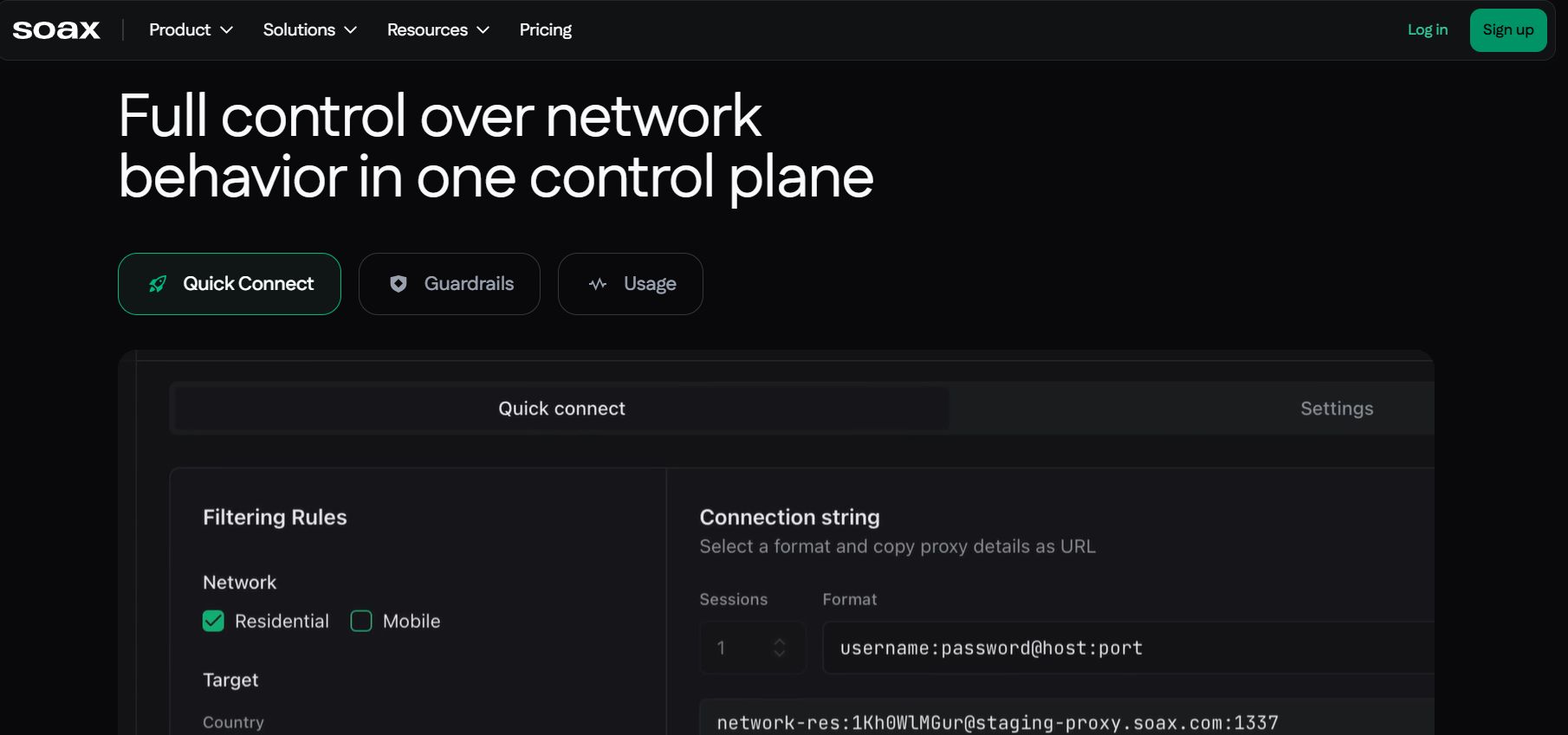
SOAX provides residential and mobile proxies for teams that need detailed geo-targeting for local and international SEO research. Its location filters can be useful when country-level access is not specific enough, and results need to reflect a particular region, city, ISP, or ASN context.
The provider can suit agencies that run local SEO programs, mobile search research, and multi-market visibility checks. Its rotation and session controls allow teams to configure access for independent keyword collection or more persistent research flows.
SEO Data Access
- Residential and mobile: Supports consumer-network and mobile-network access for selected SEO tasks.
- Detailed geo-targeting: Offers country, region, city, ISP, and ASN controls on relevant products.
- ISP-level controls: Can help refine the network context used for localized research.
- Rotation options: Supports broad keyword collection and independent search requests.
- Session persistence: Sticky configurations can support connected public browsing and repeated checks.
Workflow Fit
- Local SEO: Supports location-specific research for local pages, services, and competitors.
- City-specific SERPs: Helps compare city-level organic results and local packs.
- Mobile search research: Can fit public research into mobile-focused search experiences.
- International visibility checks: Supports structured comparisons between countries and regional markets.
3. Webshare
Webshare is a self-service provider with rotating residential, static residential, private static residential, and dedicated static residential products. It can fit technical SEO teams that want direct control over proxy lists, authentication, API access, and internal collection tools.
Its product range can support both automated keyword research and more stable environments for recurring source checks. Teams can select rotating or static access according to whether the SEO workflow prioritizes broad collection or persistent identity. This flexibility can also suit custom rank-tracking systems, scheduled crawls, and developer-managed SEO data pipelines.
SEO Data Access
- Residential options: Provide rotating residential access for broad public search-data collection.
- Static residential options: Supports longer-running research environments that need a more consistent IP identity.
- Rotation controls: Helps distribute independent SERP checks and crawl requests.
- API management: Can integrate proxy access with custom rank trackers, scripts, and crawlers.
- Scalable configurations: Lets teams adjust proxy quantity and traffic according to workflow growth.
Workflow Fit
- Custom SEO tools: Fits in-house rank trackers, crawlers, and reporting platforms.
- Scheduled SERP checks: Supports recurring keyword, competitor, and feature monitoring.
- Website crawling: Can help distribute approved crawling across larger URL queues.
- Automated keyword research: Works with compatible scripts that collect public search results.
4. Oxylabs
Oxylabs is an enterprise-focused provider with residential, ISP, datacenter, mobile, and dedicated ISP proxy products. It can suit organizations that need broad international coverage, detailed targeting, and capacity for large SEO data operations.
Its wider web-data infrastructure makes it relevant for teams running production-scale SERP datasets, international monitoring, and large crawl programs. The provider can also fit organizations that need structured support and managed collection tools alongside raw proxy access. This makes it suitable for enterprise SEO environments where data collection needs to scale across many markets, keywords, and recurring research workflows.
SEO Data Access
- Multiple proxy networks: Lets teams match residential, ISP, mobile, or datacenter access to the SEO source and workflow.
- Broad geo coverage: Supports international rank tracking and multi-country research.
- Session controls: Provides rotation and sticky options for independent or connected collection tasks.
- High request capacity: Can support large keyword sets and recurring data pipelines.
- Enterprise infrastructure: Fits larger teams that need scalable, managed SEO data operations.
Workflow Fit
- Large SEO platforms: Supports high-volume public search-data collection for established SEO operations.
- International SERP datasets: Helps compare public search visibility across several countries and regions.
- Enterprise monitoring: Can fit recurring keyword, competitor, and market tracking programs.
- High-volume crawling: Supports broad website research and larger technical SEO workflows.
5. IPRoyal
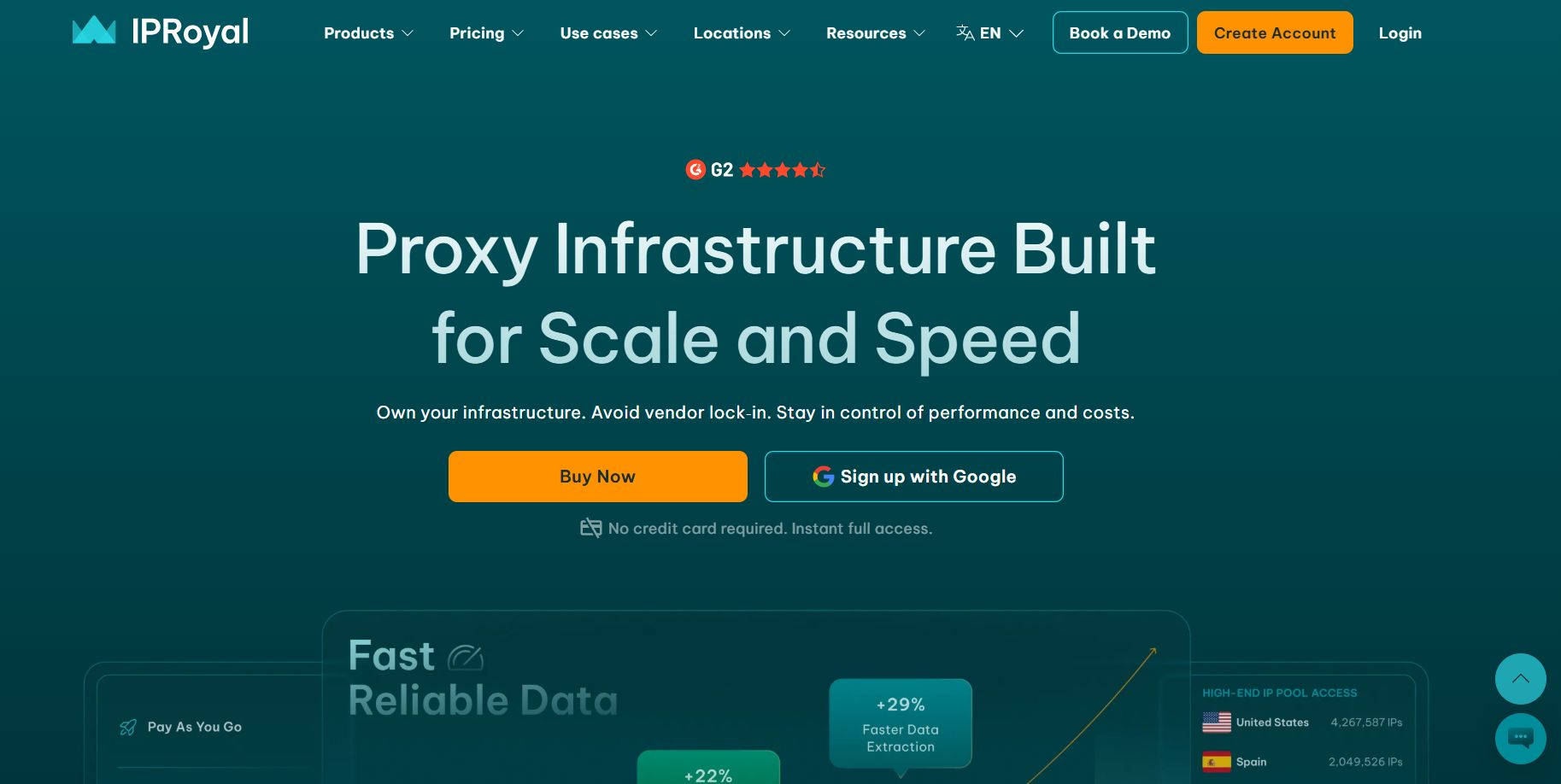
IPRoyal provides residential, ISP, mobile, and datacenter proxies for teams that need flexible traffic purchasing and a choice between rotating and more stable connections. Its residential traffic does not expire, which can be useful for SEO teams with recurring but uneven keyword-check volumes.
Sticky residential sessions can last up to seven days, while ISP options offer a more stable identity for persistent research. This makes IPRoyal relevant for smaller agencies, local SEO work, and teams that need to revisit the same public sources over time.
SEO Data Access
- Residential and ISP proxies: Support rotating SERP collection and more stable repeated research.
- Geo-targeting: Offers location controls for country, state, city, ZIP code, and ASN research needs.
- Sticky sessions: Can retain one identity for longer connected public workflows.
- Rotation: Supports independent keyword checks and wider public search collection.
- Stable IP options: ISP products can suit persistent SEO research environments.
Workflow Fit
- Local SEO research: Helps review public results and competitors in selected locations.
- Recurring keyword checks: Non-expiring traffic can fit scheduled but irregular rank monitoring.
- Smaller rank datasets: Flexible purchasing can suit lower-volume agency and in-house workflows.
Persistent SEO tasks: Sticky and ISP options support repeated page checks under a stable identity.
6. Decodo
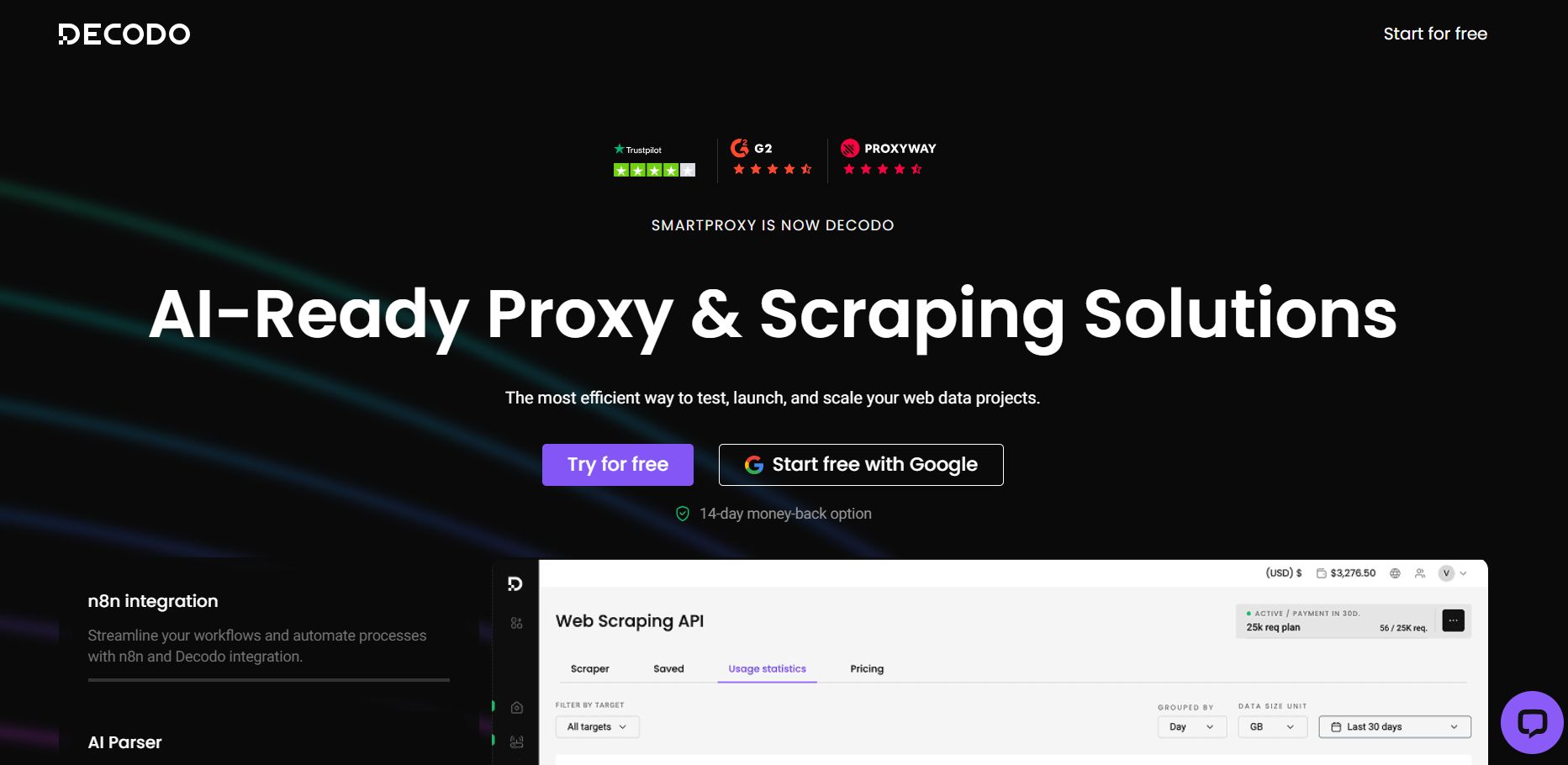
Decodo, formerly Smartproxy, provides residential, ISP, mobile, and datacenter proxies for teams that need scalable SEO automation and flexible collection methods. Its product range can fit agencies that combine rank monitoring, crawler workflows, regional research, and structured search-data collection.
Residential access supports geo-targeting, rotation, and sticky sessions, while its wider infrastructure gives technical teams options for different types of search and website data. This flexibility can be useful when one SEO program covers local visibility, international research, and repeated competitor checks. It can also support recurring collection across larger keyword sets, multiple target markets, and scheduled SEO monitoring workflows.
SEO Data Access
- Residential and ISP access: Supports broad rotating collection and longer stable research sessions.
- Geo-targeting: Provides country, state, city, ZIP code, and ASN controls on relevant plans.
- Rotation controls: Helps distribute independent SERP and keyword requests.
- Sticky sessions: Supports multi-page public research and connected browser flows.
- Automation-oriented infrastructure: Can fit developer-managed rank tracking and data collection.
Workflow Fit
- Agency SEO: Supports client-specific research across different campaigns and markets.
- Automated SERP collection: Can connect to scheduled scripts and internal tracking tools.
- Keyword monitoring: Supports recurring visibility checks for priority terms and competitors.
- Regional research: Helps compare public search results between selected local markets.
7. Rayobyte
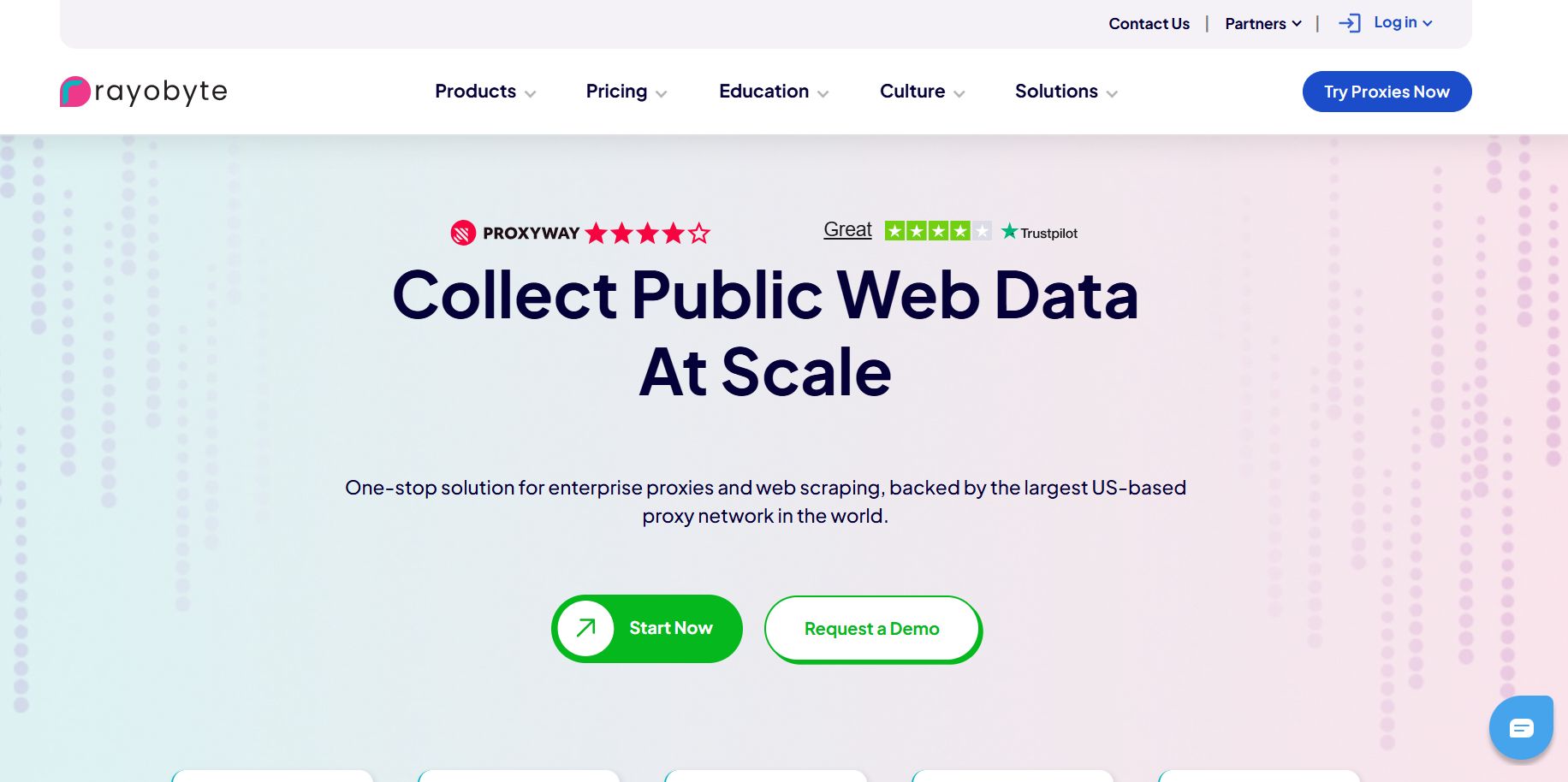
Rayobyte offers residential, static ISP, rotating ISP, static datacenter, rotating datacenter, and mobile proxy products. Its mixed network range can suit SEO teams that need to separate high-speed crawling, stable recurring research, and rotating public search-data collection.
The provider can be particularly useful when a technical SEO workflow includes more than one type of task. Teams can select rotating access for broad data collection and stable options for repeated source monitoring, subject to the controls available on the chosen product. This flexibility can help technical teams match proxy behavior to crawling, rank tracking, competitor monitoring, and other recurring SEO research tasks.
SEO Data Access
- Residential access: Supports public search and competitor research from selected locations.
- ISP options: Provide more stable identities for recurring SEO workflows.
- Datacenter products: Can suit high-speed crawling and lower-sensitivity public-page checks.
- Rotating options: Help distribute independent keyword and crawl requests.
- Stable IP access: Supports persistent research into selected public sources.
Workflow Fit
- Website crawling: Can fit larger URL queues and technical public-page checks.
- Repeated SEO checks: Supports scheduled monitoring of rankings, content, and competitors.
- Persistent research: Stable products can help maintain a consistent research environment.
- Mixed-volume workflows: Lets teams use different proxy types as collection requirements change.
8. ProxyEmpire
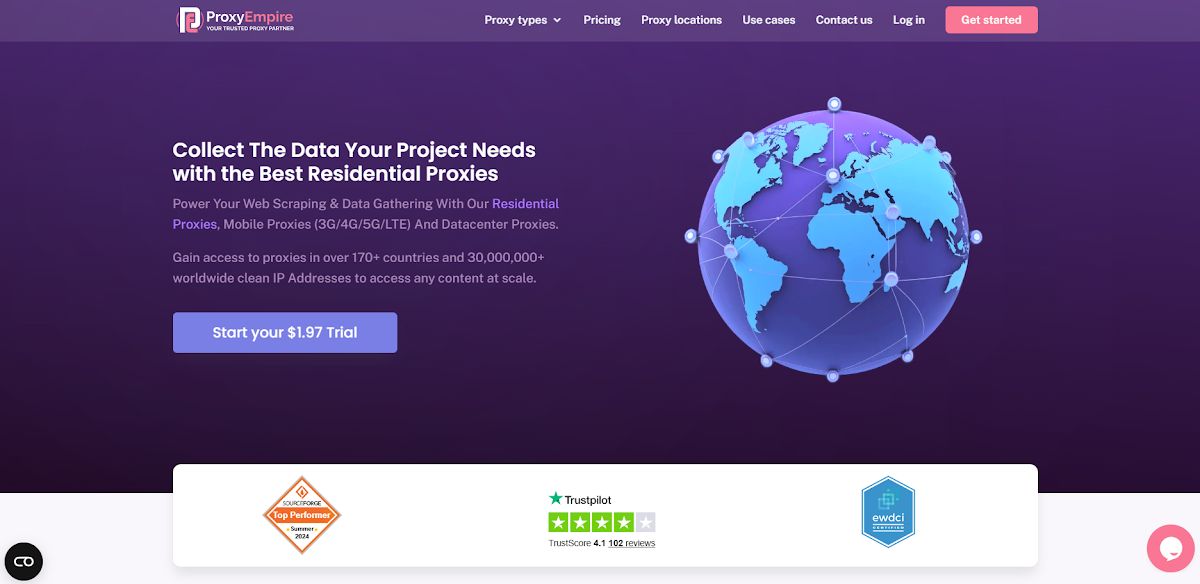
ProxyEmpire offers rotating residential, unlimited residential, static residential, rotating mobile, dedicated mobile, and rotating datacenter products. Its geographic controls and session options can suit teams that need to collect SEO data across several countries, regions, and local markets.
The provider can fit international SEO programs that combine regional SERP checks, visibility monitoring, and recurring public research. Teams can use rotation for independent keyword collection and sticky sessions for connected workflows that need more consistent browsing behavior.
SEO Data Access
- Residential and mobile networks: Supports consumer-network and carrier-network access for public SEO research.
- Rotation: Can distribute independent SERP queries and larger collection jobs.
- Sticky sessions: Supports connected research flows and repeated page checks.
- Geographic targeting: Offers country, region, city, and ISP controls on relevant products.
- Multi-market access: Can support structured collection across several countries and regions.
Workflow Fit
- International SEO: Supports comparisons between country-level and regional search markets.
- Regional SERP checks: Helps review public rankings and competitors from defined locations.
- Search visibility monitoring: Can fit recurring collection of keyword and SERP-feature data.
- Multi-country research: Supports market-by-market analysis for international campaigns.
How Do Proxies Fit Into an SEO Data Stack?
Proxies are one layer of an SEO data stack. They provide routing and location context, while the rank tracker, crawler, parser, reporting system, and validation rules determine how the resulting search data is collected and interpreted.
SERP Collection
SERP collection starts with a defined keyword list, selected search engine, location, device context, and request schedule. Proxies route the query through the intended market, while a collection tool parses the returned results and records ranking positions, URLs, snippets, and search features.
Site Crawling
Site crawling uses a URL queue, crawl rules, and response validation to review public website pages. Proxy capacity can help distribute requests, while the crawler needs to identify errors, redirects, duplicate content, missing pages, and other technical SEO signals.
Competitor Monitoring
Competitor monitoring combines repeated public SERP checks with observation of competitor pages, content updates, and landing-page changes. Consistent locations and query rules make it easier to separate genuine visibility changes from differences caused by the collection setup.
Local SEO Validation
Local SEO validation checks city-specific results, local packs, regional landing pages, and map visibility. A selected city-level location can help teams compare the public view that is more relevant to the intended service area or audience.
What Can Distort SEO Data Even With Proxies?
A proxy location is important, but it is not the only variable that affects search results. Teams should control other signals when they need comparable data across different locations or reporting periods.
- Browser language: Search engines can adjust language, spellings, and result choices according to browser settings.
- Device type: Desktop and mobile results can differ in layout, features, local packs, and ranking order.
- Cookies: Existing cookies can influence searches, region settings, and personalization signals.
- Search history: Previous activity can affect the results returned in a browser session.
- Consent state: Cookie-consent choices and privacy settings can alter website behavior and data collection.
- Query parameters: Different parameters can change the selected country, language, device, or search view.
How Do Rotation and Sessions Change SEO Results?
Rotation and sticky sessions affect how a proxy identity is used during SEO collection. The correct approach depends on whether the task consists of independent keyword checks or a connected workflow that needs the same session for several requests.
Rotating Sessions
Rotating sessions can suit large keyword lists, independent SERP samples, parallel queries, and broad crawling. A new IP can be assigned according to the provider’s rotation rules, helping distribute requests instead of concentrating every search on one connection.
Sticky Sessions
Sticky sessions retain one IP for a defined period. They can support multi-step public research, repeated page checks, browser-based workflows, and controlled comparisons where changing the network identity unnecessarily could affect the process.
How Do You Keep SEO Data Comparable Over Time?
Comparable SEO data requires a repeatable methodology, not just the same proxy provider. Teams need to keep the collection conditions stable enough to distinguish true ranking changes from differences caused by the setup.
- Same target locations: Use the same country, city, or regional settings for repeated monitoring.
- Consistent device profiles: Keep the desktop or mobile environment aligned across reporting cycles.
- Fixed collection schedules: Run key checks at consistent intervals to reduce timing-related variation.
- Recorded rotation rules: Document whether each workflow uses rotating or sticky access and for how long.
- Stable query parameters: Keep language, search engine, and location parameters consistent.
- Result normalization: Apply the same parsing and ranking rules before comparing datasets.
Which Metrics Reveal SEO Proxy Quality?
SEO proxy quality should be measured against the team’s actual keywords, locations, and collection tools. The most useful results show whether the proxy setup produces valid, localized search data consistently enough for reporting and decisions.
SERP Success Rate
SERP success rate measures how often a request returns a valid search-results page that can be parsed. It is more meaningful than simple connection success because a completed request may still return an error page, CAPTCHA, or incomplete result.
Geo Accuracy
Geo accuracy shows whether the returned search results align with the selected country, city, language, and intended market. Teams can verify this by checking local packs, regional domains, location-sensitive features, and known local competitors.
Response Latency
Response latency affects how quickly a rank tracker, crawler, or research script completes a collection cycle. Teams should measure performance under their expected keyword volume and number of parallel workers, not only in a single request test.
Result Consistency
Result consistency measures whether comparable queries from the same location and device context return reasonably similar results. Some variation is normal, but major differences can indicate a configuration issue, incorrect geo settings, or unstable session behavior.
Cost per Usable SERP
Cost per usable SERP combines proxy traffic, retries, tooling, and validation overhead with the number of valid, localized result pages collected. It gives teams a more realistic view of operating cost than the advertised proxy price alone.
Conclusion
The best SEO proxy setup depends on the workflow. Local rank tracking and international research need accurate location controls, large keyword datasets need controlled rotation and enough parallel capacity, while connected public research can benefit from sticky sessions and a stable identity.
Teams should keep location, device, language, query settings, and collection schedules consistent before comparing rankings over time. Test providers against the actual search engine, target market, keyword set, and reporting process before scaling the SEO data workflow.